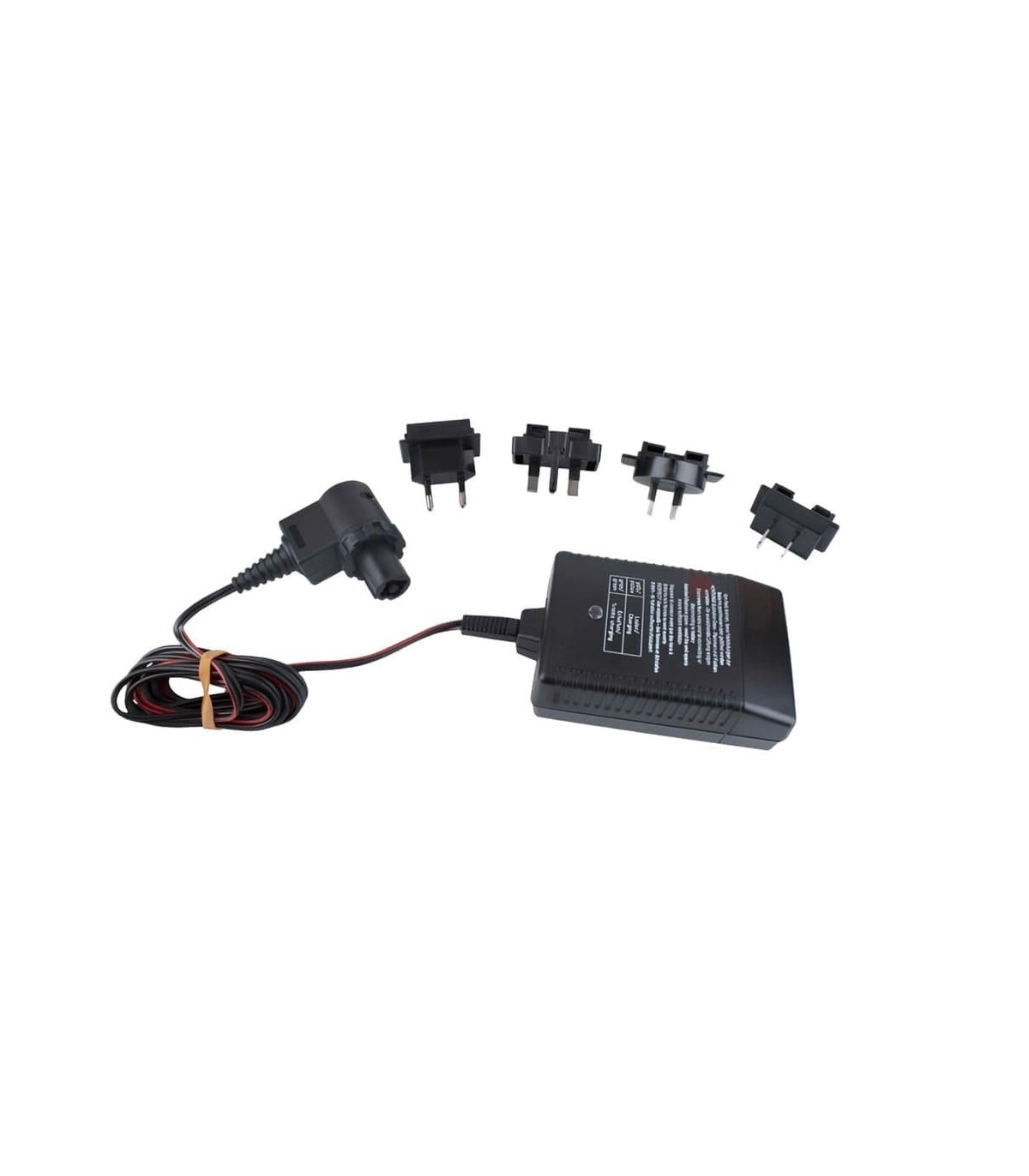
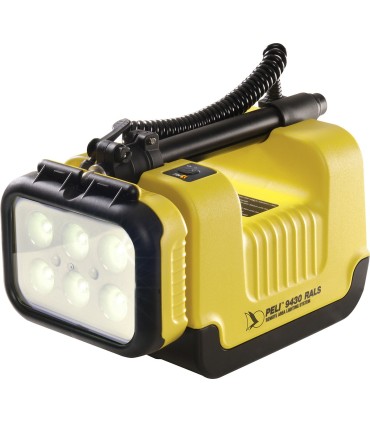
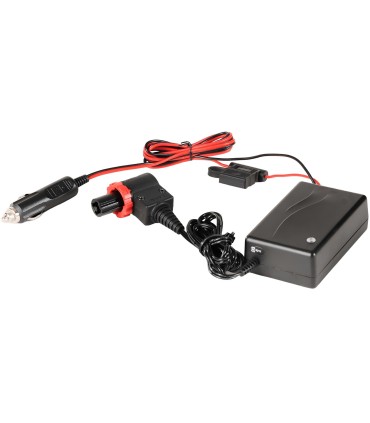
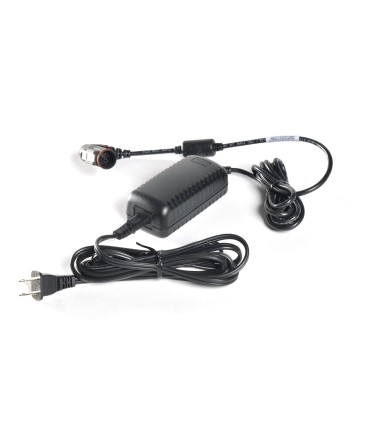
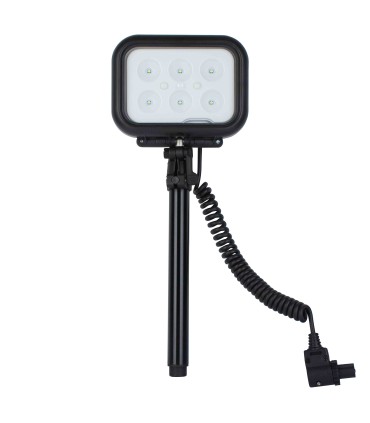
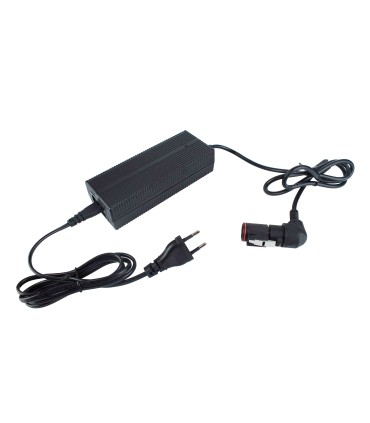
The 220/230 V PELI 9438B mains charger is specially designed to recharge RALS 9430B and RALS 9430C generation 2 and 3 arealighting floodlights. It enables reliable recharging from a wall socket (workshop, depot, base station), so you can quickly get your equipment back into service between jobs.
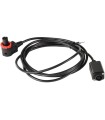
The models concerned can be identified by their black external connectors, a simple marker to avoid any compatibility errors.
Specifications
- Compatibility: RALS 9430B / 9430C - generation 2 and 3 (black connectors)
- Power supply: 230 V mains
- Battery type: complies with lead-acid battery charging mode
- Design: reinforced polypropylene shell
- Cable length: 1.85 m
- Connectors: 4 plug adapters (types A, C/E/F, G, I) for international use
- Weight: 350 g
Advantages of 9438B mains charger for Peli™ RALS headlamp
- Optimized charging: charge cycle complies with manufacturer specifications, suitable for lead-acid batteries.
- Robustness: reinforced polypropylene shell, suitable for professional use (workshop, equipment park, worksite).
- International use: adapters supplied for easy recharging in different locations.
- Practical: 1.85 m cable for easy, everyday charging.
Use
This charger is recommended for the maintenance and reconditioning of RALS 9430B/9430C floodlights: recharging in the depot, workshop or equipped site, before storage or deployment. It's a simple solution for securing the availability of your area lighting.
Questions from the field
How can I be sure that my spotlight is compatible?
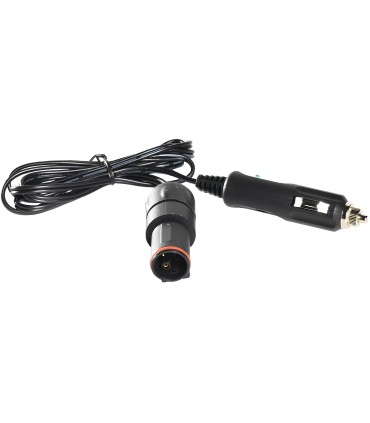
Check the part number(9430B or 9430C), then the visual markings: the black external connectors correspond to generation 2 and 3 projectors, which avoids confusion between generations. Another useful clue, depending on configuration: if your projector is equipped with a Cliff socket with a red or black ring, these are also compatible models.
Why choose a manufacturer's charger rather than a universal model?
Because it respects the lead-acid charging mode designed for these projectors, which ensures safe recharging and reduces the risk of degraded autonomy or irregular performance, particularly important on a lighting system used in professional conditions.
Read moreShow less




 English
 Français
 Deutsch
 Español