Facilitating the Relocation of a Fire Training Facility Filled with Water
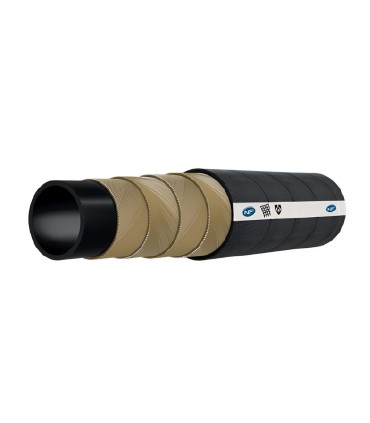
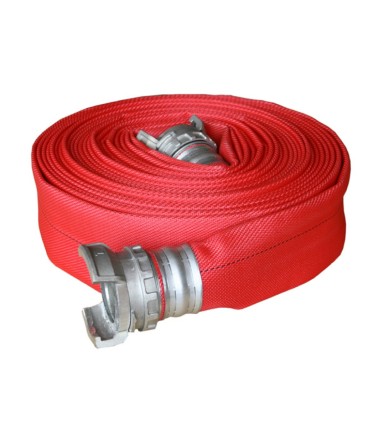
Once a building has been flooded, moving it can quickly become difficult. The weight of the hose increases, friction against the ground slows progress, and couplings can snag on a curb, an uneven spot in the ground, or another obstacle. These challenges become particularly significant when moving a long length of hose, changing the route, or repositioning a line that is already under pressure.
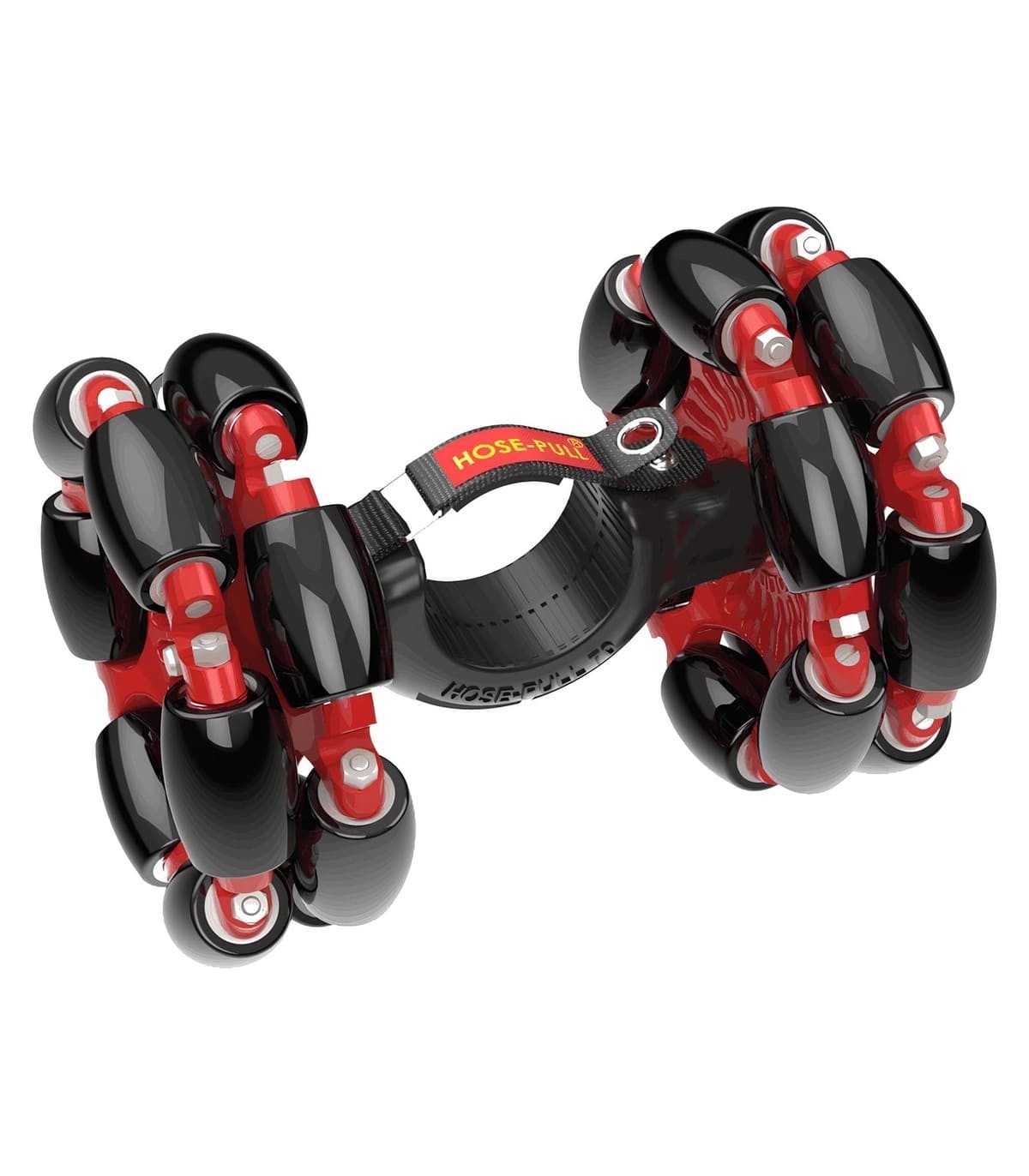
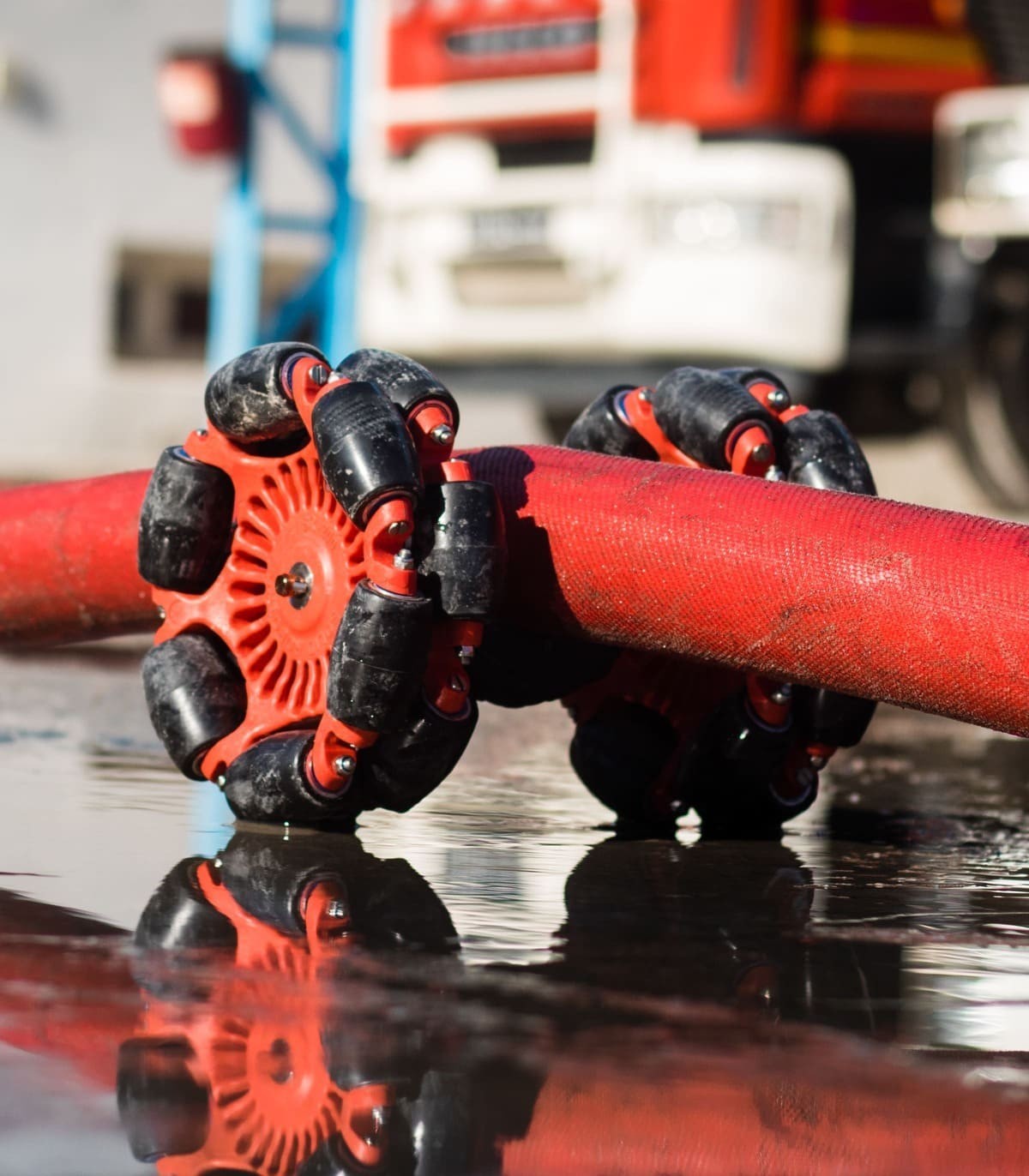
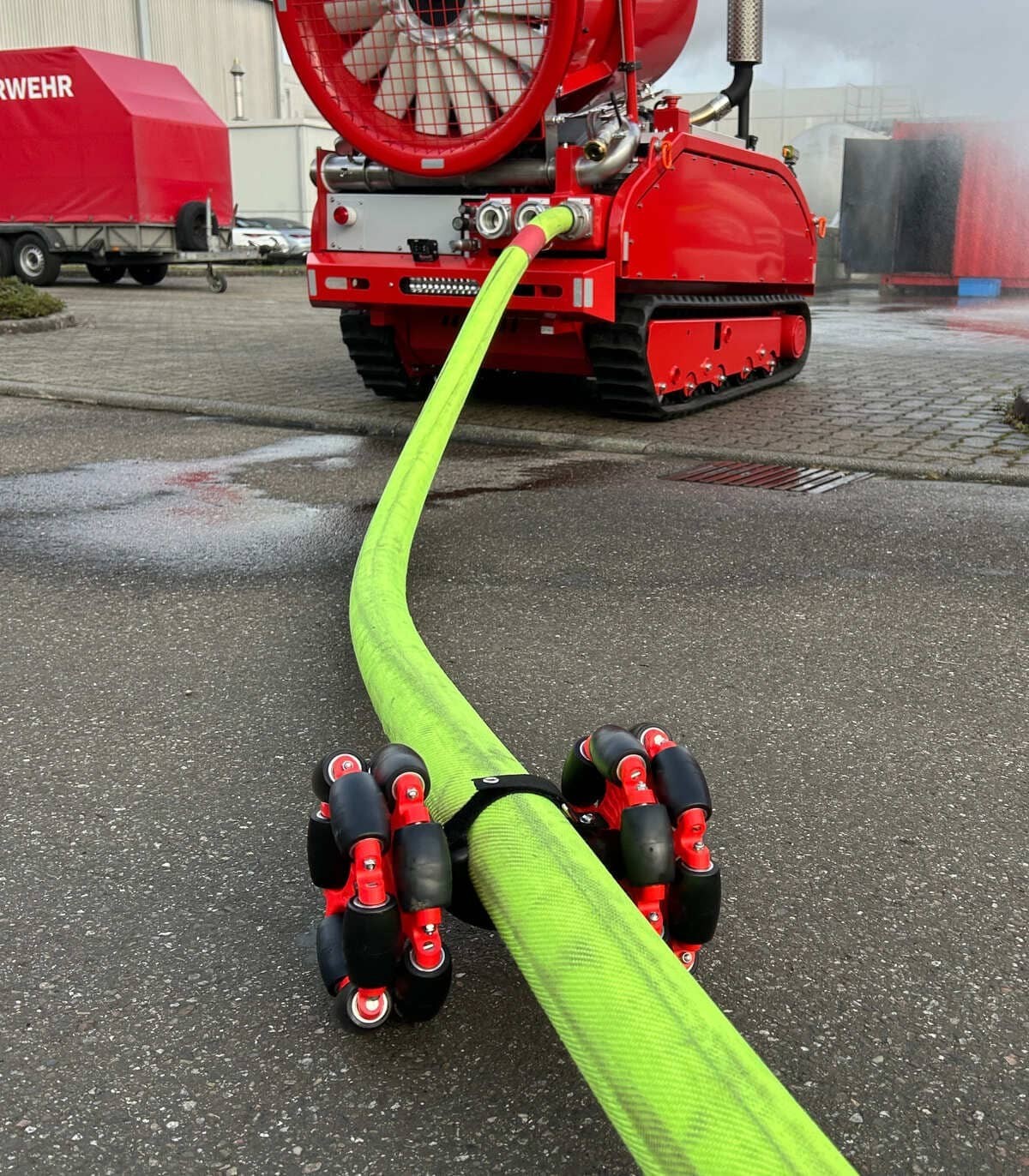
The HOSE-PULL system was designed to facilitate these maneuvers. Installed directly beneath the hose, it creates a rolling point that minimizes contact with the ground and guides the hose as it moves. The hose and its couplings are slightly raised, which facilitates their movement and reduces the risk of jamming when changing direction or crossing obstacles.
The device can thus be used both when deploying a line and when a system already under water pressure needs to be moved or reorganized during the operation.
Omnidirectional wheels to follow the hose’s movements
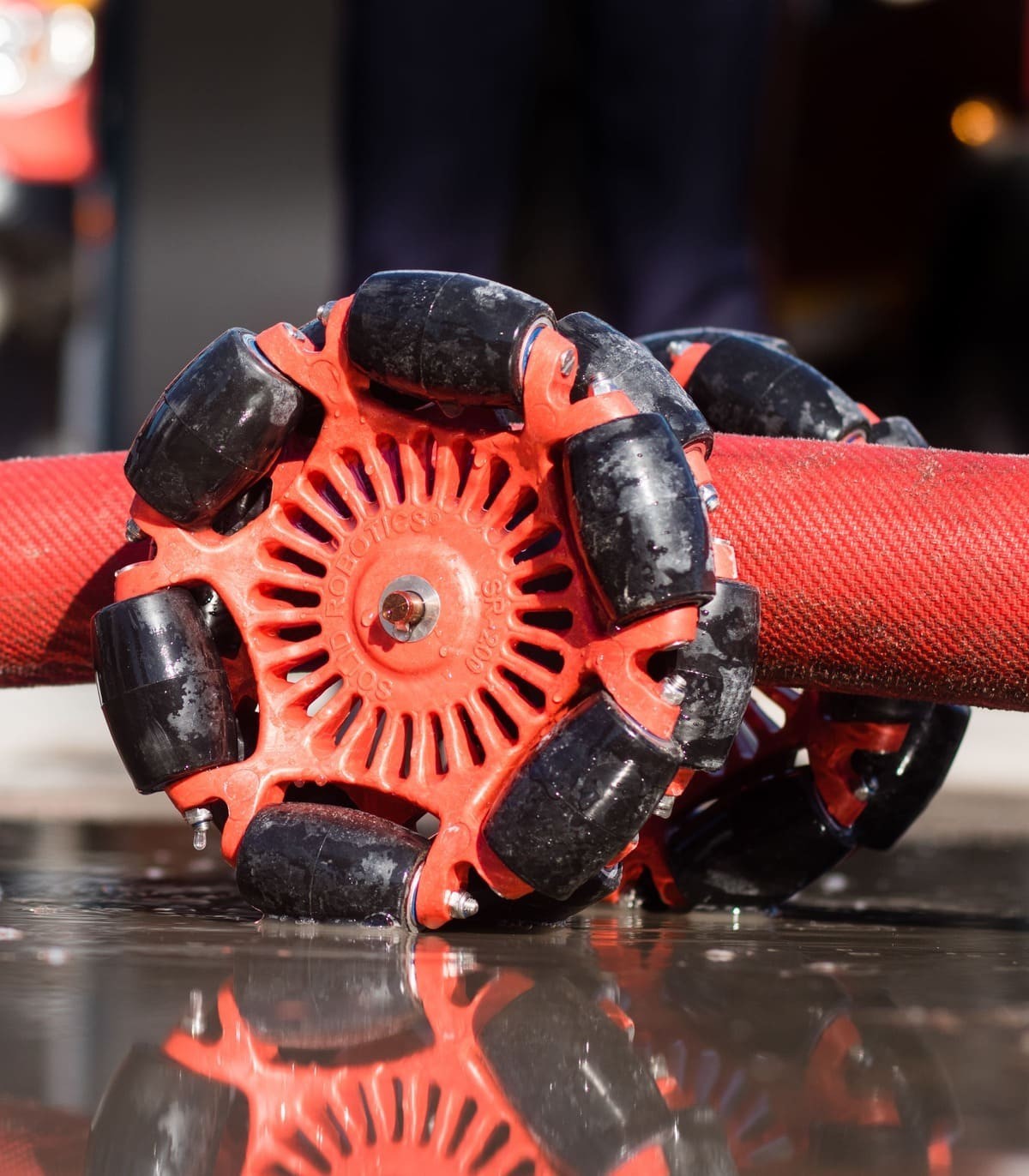
The unique feature of HOSE-PULL lies in its omnidirectional wheels. Unlike conventional casters, they do not restrict the device to a single direction of travel. The system can naturally follow the hose’s movements forward, to the side, or when changing direction.
This freedom of movement is particularly useful in work areas where the path is not straight: maneuvering around a vehicle or piece of equipment, navigating between various obstacles, moving through a building, or repositioning a line on an industrial site.
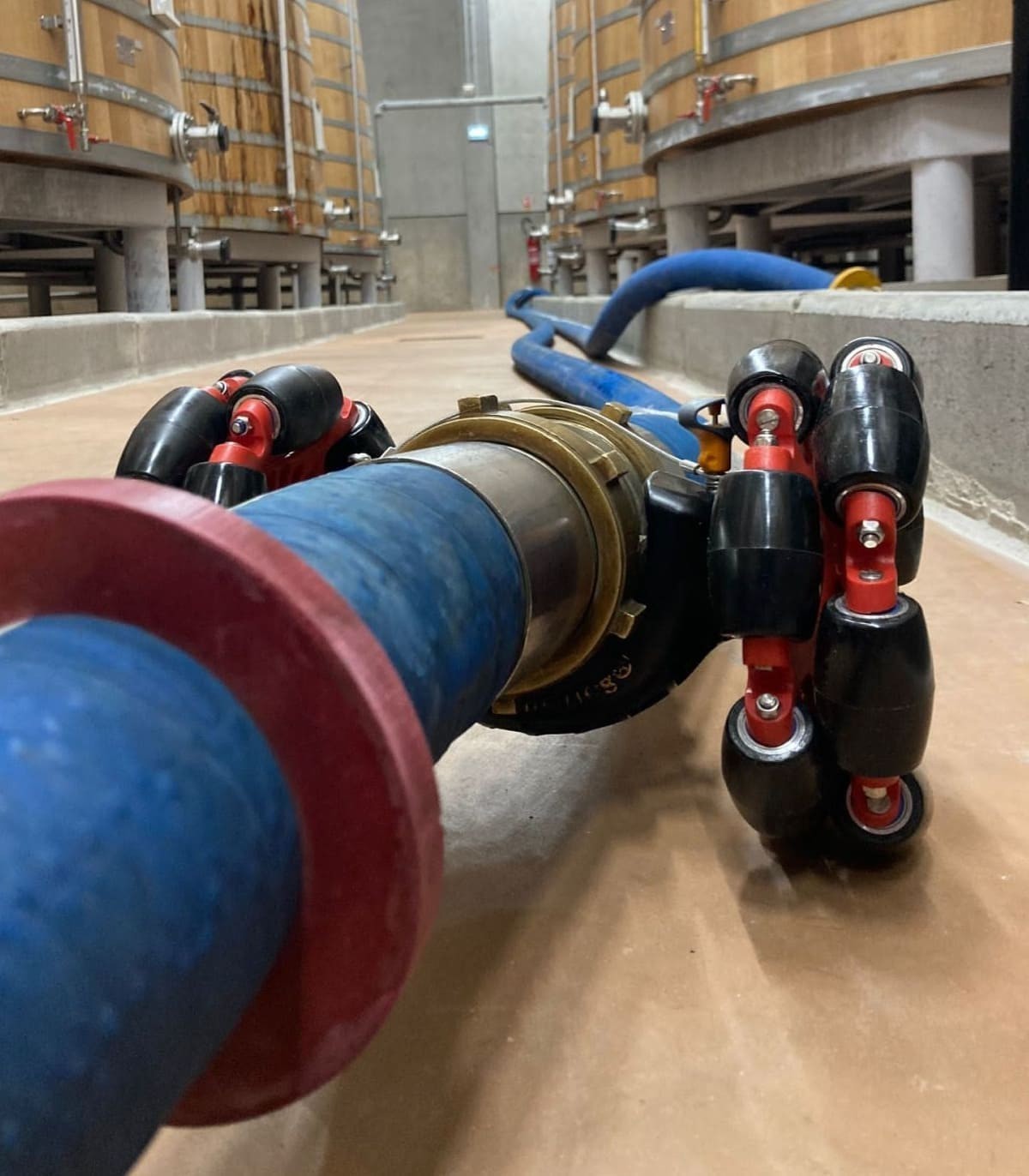
By keeping part of the hose off the ground, HOSE-PULL also minimizes direct friction against the hose’s outer casing and reduces the likelihood of couplings snagging on rough surfaces along the route.
Reducing the effort required to handle hoses
Of course, HOSE-PULL does not reduce the actual weight of a hose filled with water. Its benefit lies elsewhere: by replacing some of the sliding on the ground with a rolling motion, it makes it easier to pull and reposition the hose.
This assistance is particularly valuable when several dozen meters of hose need to be moved or when a pressurized line must be reoriented during an operation. By reducing resistance to movement, the system helps minimize the physical effort required of crews and can enable more efficient deployment of available personnel.
The device is designed for quick installation around the pipe. Its wraparound cradle secures the line during movement, and it can be secured—depending on the configuration—using either a ball-lock mechanism or a strap system. The manufacturer claims installation takes less than 5 seconds—a significant advantage when the device must be added directly in the field.
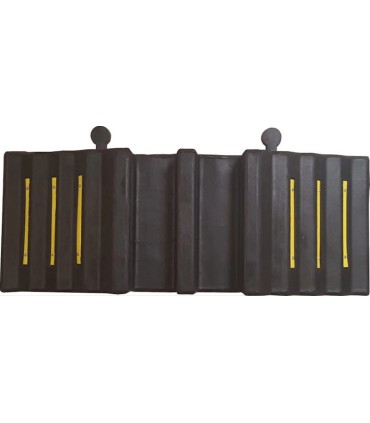
To secure the route through a facility: When hoses must cross a traffic lane, also check out ourfire hose crossing beams
Configurations for DN45, DN70, and DN100 fire hoses
We have selected three configurations to cover several diameters commonly found in fire protection systems: DN45, DN70, and DN100.
It is important to distinguish between the pipe’s nominal diameter and the dimensions of the HOSE-PULL pipe rack. The DN corresponds to the pipe’s nominal inside diameter, whereas the pipe rack must account for its actual outside diameter. The two values are therefore not necessarily the same.
| Nominal Pipe Diameter |
HOSE-PULL Configuration |
Special Feature |
| DN45 |
Configuration with adapter for DN45 |
Adaptation designed for facilities using DN45 hoses |
| DN70 |
75 mm cradle |
Configuration adapted to the pipe’s outer diameter |
| DN100 |
110 mm pipe cradle |
Configuration designed for large-diameter applications |
The configuration for DN45 hoses deserves special attention. It uses an adapter that allows the HOSE-PULL principle to be applied to this diameter, which is widely used by fire and rescue services. This solution complements the configurations designed for larger-diameter lines and allows the system to be adapted to a wider range of operational situations.
A design tailored to the demands of emergency operations
HOSE-PULL was designed as field equipment. Its cradle is made of PA66 polyamide, a material with good mechanical strength that is suitable for use in environments exposed to water, dirt, and the stresses of handling.
The rolling components combine different materials depending on their function, including polyurethane, aluminum, stainless steel, and reinforced polymer. The manufacturer’s documentation also specifies a temperature resistance range for the cradle between -20 and +180 °C.
This design makes it suitable for use in a variety of environments: fire and rescue operations, hydraulic systems at industrial sites, sensitive facilities, or operations requiring the movement of hoses or transfer lines over long distances.
HOSE-PULL is therefore not limited to conventional firefighting operations. Its design principle may also be of interest in industrial and nuclear sectors, or more broadly at sites where handling heavy or pressurized hoses is a recurring challenge.
Technical Specifications of the HOSE-PULL System
| Function |
Assistance with moving and handling hoses |
| Type of movement |
Omnidirectional |
| Compatibility options offered by MMF |
DN45, DN70, and DN100 |
| DN45 configuration |
With specific adapter for DN45 pipe |
| DN70 cradle |
75 mm |
| DN100 cradle |
110 mm |
| Cradle material |
Polyamide PA66 |
| Rim |
PA6GF30 |
| Overmolding of rollers |
Polyurethane |
| Hub and bearings |
Stainless steel |
| Spacer |
Aluminum |
| Strap |
Polyamide, 25 mm wide |
| Specified temperature range for the cradle |
-20 to +180 °C |
Frequently Asked Questions About HOSE-PULL
Can other pipe diameters be accommodated?
Yes. The manufacturer provides adapters for various diameters less than 110 mm. The DN45, DN70, and DN100 versions correspond to the configurations we have selected for our product line, but other adaptations can be considered depending on the hose used and the intended application.
Can multiple HOSE-PULL units be connected?
Yes. A dedicated coupling ring allows multiple HOSE-PULL cradles to be connected. This option can be particularly useful when an installation requires multiple feed-through points or a specific configuration on a single line.