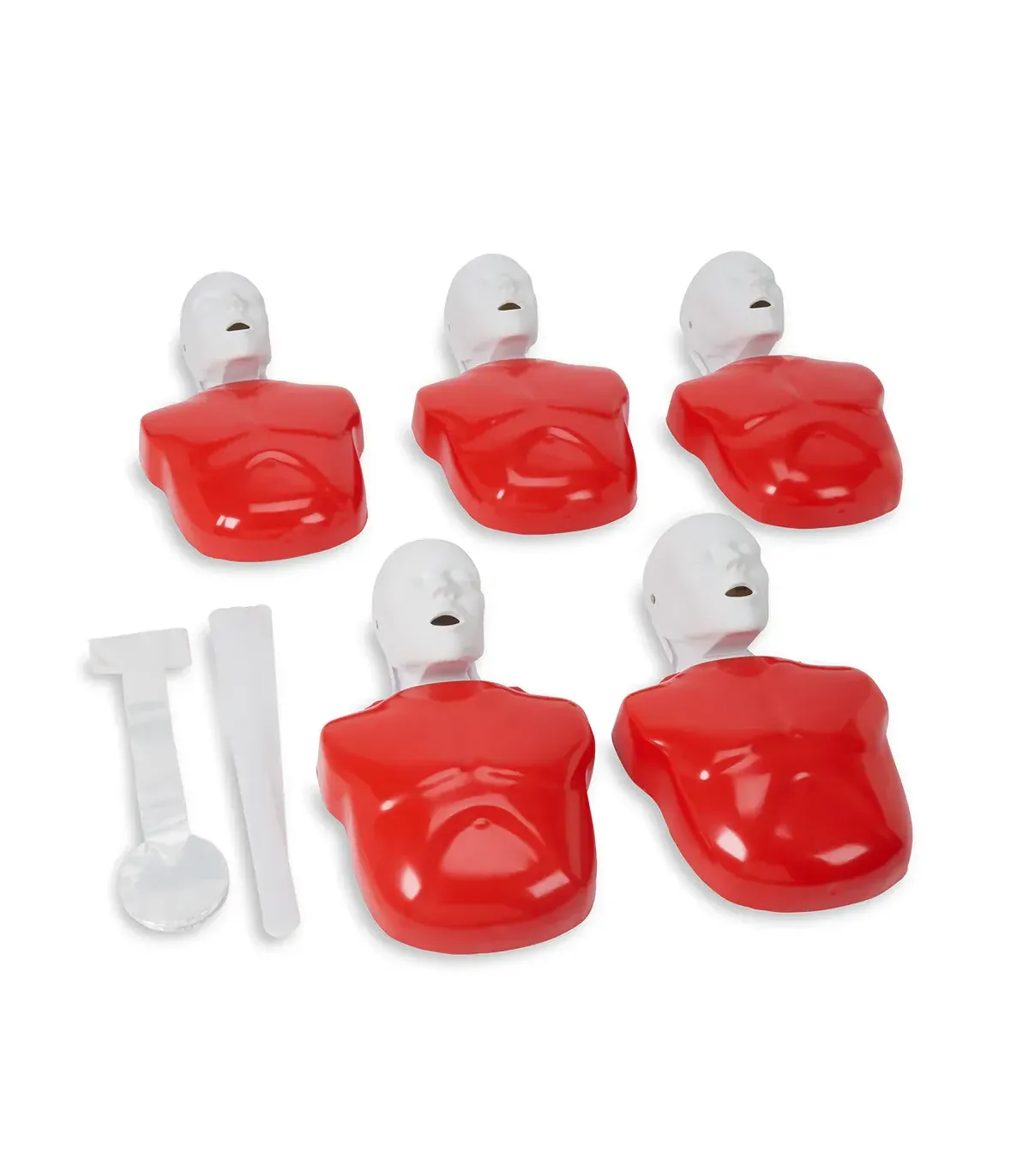
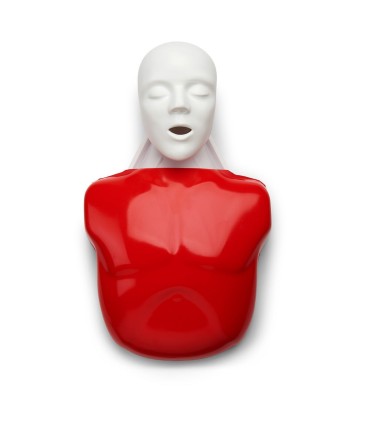
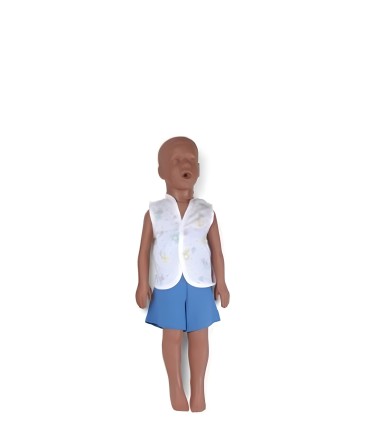
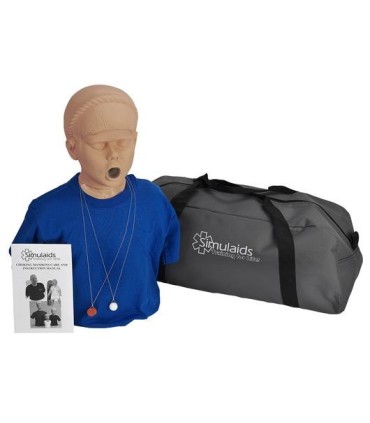
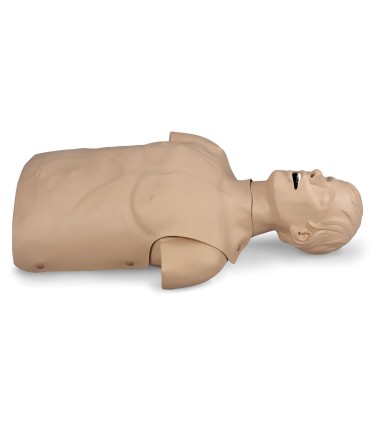
The set of 5 Basic Buddy CPR manik manikins sis designed for teaching cardiopulmonary resuscitation(CPR) techniques in training centers, schools, organizations, emergency response agencies, or first aid training facilities.
Each manikin allows learners to practice essential maneuvers: opening the airway by tilting the head and lifting the chin, ventilation with visible chest rise, and chest compressions using the xiphoid process as an anatomical landmark.
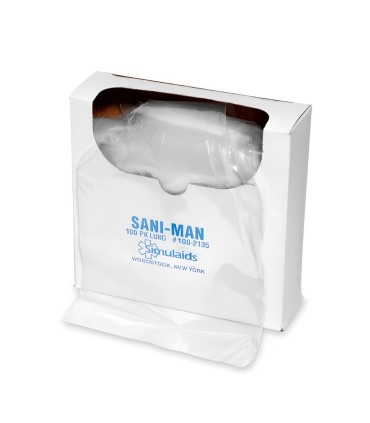
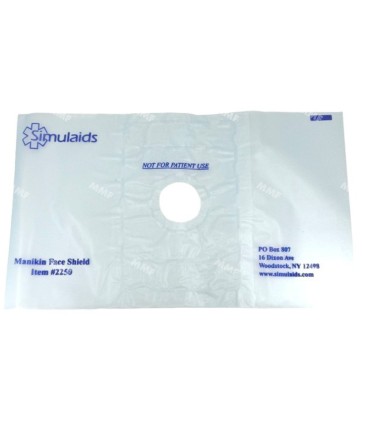
The disposable, one-piece lung/mouth protection system simplifies the organization of repeated training sessions. It minimizes the need for cleaning between learners and ensures that each participant has a hygienic training manikin.
Technical Specifications
| Technical Specifications – Set of 5 Basic Buddy CPR manikins |
| Product Type |
Set of CPR training manik manikins |
| Number of manikins |
5 manikins |
| Training Profiles |
Adult and child |
| Skills Practiced |
Opening the airway, rescue breaths, chest compressions |
| Opening the airway |
Head tilt and chin lift |
| Ventilation |
Visible rise of the chest |
| Anatomical landmark |
Xiphoid process for hand placement |
| Hygiene system |
Disposable, one-piece lung/mouth protection |
| Contents Included |
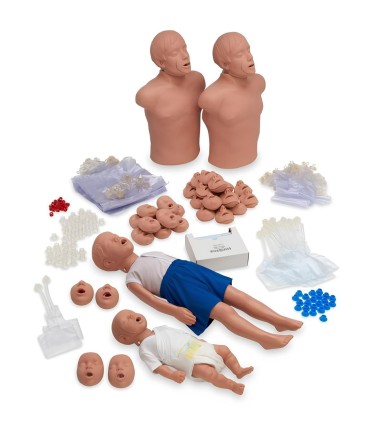
5 adult/child- manikins, 50 lung/mouth protection bags, 5 lung insertion tools, carrying case, instruction manual |
| Shipping dimensions |
23 x 20 x 20 inches, or approximately 58.4 x 50.8 x 50.8 cm |
| Shipping weight |
14 kg |
Uses
- CPR training;
- group training sessions with multiple participants;
- teaching chest compressions and rescue breaths;
- first aid, emergency response, occupational health and safety (OHS), or equivalent training;
- use in training centers, schools, associations, or emergency response organizations.
FAQ – Set of 5 Basic Buddy CPR manikins
Do the manikins allow for practice with both adult and pediatric procedures?
Yes. The Basic Buddy manikins offer both adult and pediatric modes, allowing you to adapt training scenarios to the specific audience being trained.
How is hygiene managed during training sessions?
The system uses a single-piece, disposable mouth-to-lung barrier. This minimizes the risk of cross-contamination and reduces the need for cleaning between users.
How can you verify that rescue breaths are performed correctly?
When a rescue breath is performed correctly, a visible rise in the chest allows for visual confirmation of the effectiveness of ventilation.
Read moreShow less




 English
 Français
 Deutsch
 Español